
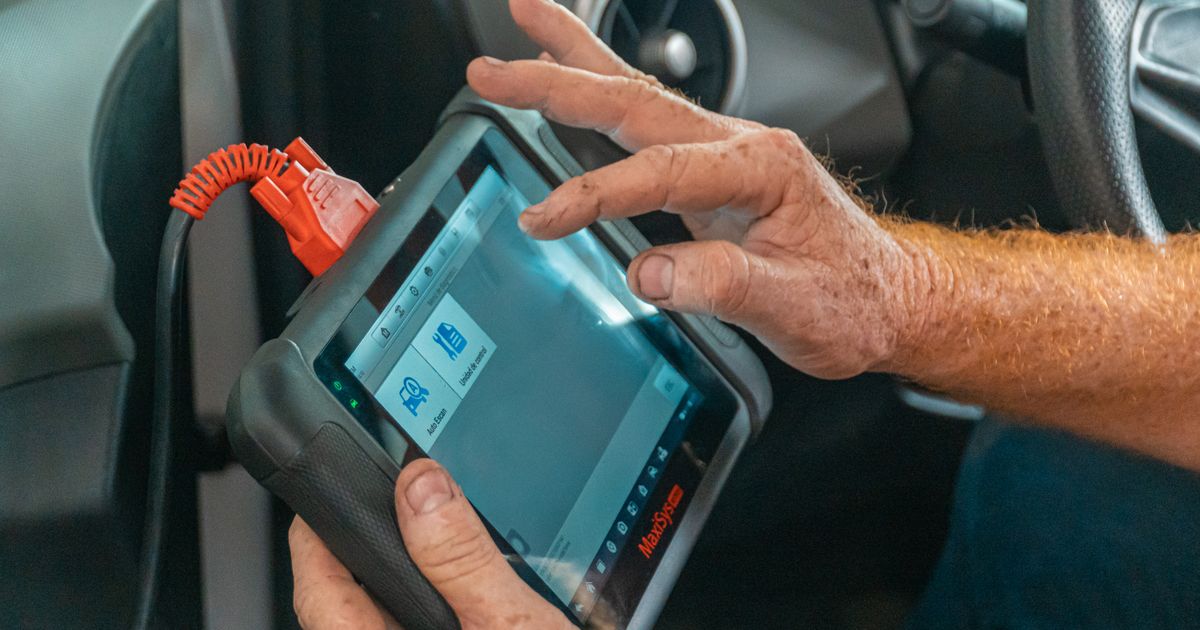

This section teaches you how to separate oxygen sensor circuit codes from sensor failure by documenting voltage readings. Carefully record related fault codes and wiring conditions to avoid jumping to conclusions about sensor malfunction. Understanding the nuances between code generation and actual sensor failure is crucial for accurate vehicle diagnostics. Avoid immediate sensor replacement; instead, gather comprehensive evidence to ensure a precise diagnosis.
To record standard engine and emissions fault codes before making changes, try AutoScan for Windows free trial with a compatible ELM327 adapter.
What the code records
An oxygen-sensor circuit code signals potential issues with emissions control, not necessarily sensor failure. Record voltage levels, wiring conditions, and related codes to separate sensor issues from wiring problems. Observing these details helps technicians avoid misdiagnosing the oxygen sensor as faulty when wiring is at fault. Accurate documentation ensures mechanics address the correct component, preventing unnecessary part replacements.
For further detail, see SAE J1979 standard overview guidance.
Symptoms and context worth noting
Record the oxygen sensor's voltage and wiring condition before diagnosing to separate circuit issues from sensor failure. Note related fault codes and their timing, as simultaneous codes can indicate broader electrical or mechanical issues. Avoid jumping to conclusions; observe how the car behaves under varying conditions before deciding on repairs. Document any unusual noises, smells, or performance drops, as these symptoms can provide context for diagnostic codes.
For further detail, see US EPA OBD information guidance.
Evidence to save before clearing
Before clearing fault codes, record the oxygen sensor's voltage readings to assess its functionality accurately. Inspect the wiring connections to the oxygen sensor for any signs of damage or corrosion before proceeding. Note related diagnostic trouble codes (DTCs) to identify broader system issues beyond just the oxygen sensor. Document the exact conditions under which the codes were triggered to assist in diagnosing the underlying cause.
Possible system-level causes
System-level issues like wiring faults or grounding problems can trigger oxygen sensor circuit codes. Inspecting the vehicle's electrical system for signs of corrosion or damage helps prevent misdiagnosis. Ensure all related OBD-II codes are logged before addressing potential system-wide electrical faults. Addressing broader electrical system issues may resolve multiple codes simultaneously, improving vehicle performance.
A sensible diagnostic sequence
Begin by recording oxygen sensor voltage and wiring condition before addressing any fault codes. Next, check for related codes to ensure a comprehensive understanding of system interactions. Avoid jumping to conclusions; observe patterns in recorded data to separate symptoms from causes. Document findings meticulously for a thorough diagnostic sequence that guides informed decisions.
When professional diagnosis is safer
Professional diagnosis ensures accurate identification of underlying issues beyond surface-level fault codes. A skilled mechanic can interpret complex error codes, providing a thorough vehicle health assessment. Avoid self-diagnosis pitfalls by entrusting your vehicle to experts who use advanced diagnostic tools. Professional diagnostics prevent costly mistakes by accurately pinpointing issues, ensuring safe and effective repairs.
Use the code as evidence, not a parts list
A diagnostic trouble code identifies the system or test that noticed an unexpected result; it does not prove that the component named in the description has failed. Before clearing anything, save the full code, whether it is stored or pending, the freeze-frame values and any symptoms you observed. Compare those clues with vehicle-specific workshop information. Wiring, air or exhaust leaks, low voltage and related faults can produce similar codes, so replacing the first part mentioned is an expensive way to guess.
Know the limits of a scan
Standard OBD information is useful, but it is only one layer of a diagnosis. Braking, airbag, high-voltage and manufacturer-specific systems may need compatible equipment and trained handling. A scan also cannot confirm that a safety recall has been completed: use the manufacturer or the official GOV.UK recall service. If the car runs roughly, loses power, overheats, shows a red warning, smells of fuel or makes an unusual mechanical noise, stop and seek qualified help rather than continuing a test drive.
Next steps
Record voltage levels, wiring conditions, and related codes before addressing an oxygen sensor circuit issue. Avoid jumping to conclusions; observe and document all relevant data to separate symptoms from definitive diagnoses. Understanding the broader system context helps in identifying whether an oxygen sensor issue is isolated or widespread. Professional assessment may be necessary if DIY diagnostics do not clarify the underlying cause of the fault code.

Common questions
What should I do if my car's oxygen sensor circuit code appears?
Record voltage levels, wiring conditions, and related codes before addressing the issue. Avoid immediate sensor replacement; gather comprehensive evidence to ensure a precise diagnosis.
How can I prevent misdiagnosing my car's oxygen sensor?
Document oxygen sensor voltage and wiring condition to separate circuit issues from sensor failure. Note related fault codes and their timing to identify broader system issues.
Why is professional diagnosis recommended for complex car issues?
Professional diagnosis ensures accurate identification of underlying issues beyond surface-level fault codes. Experts use advanced diagnostic tools to prevent costly mistakes and ensure safe repairs.