
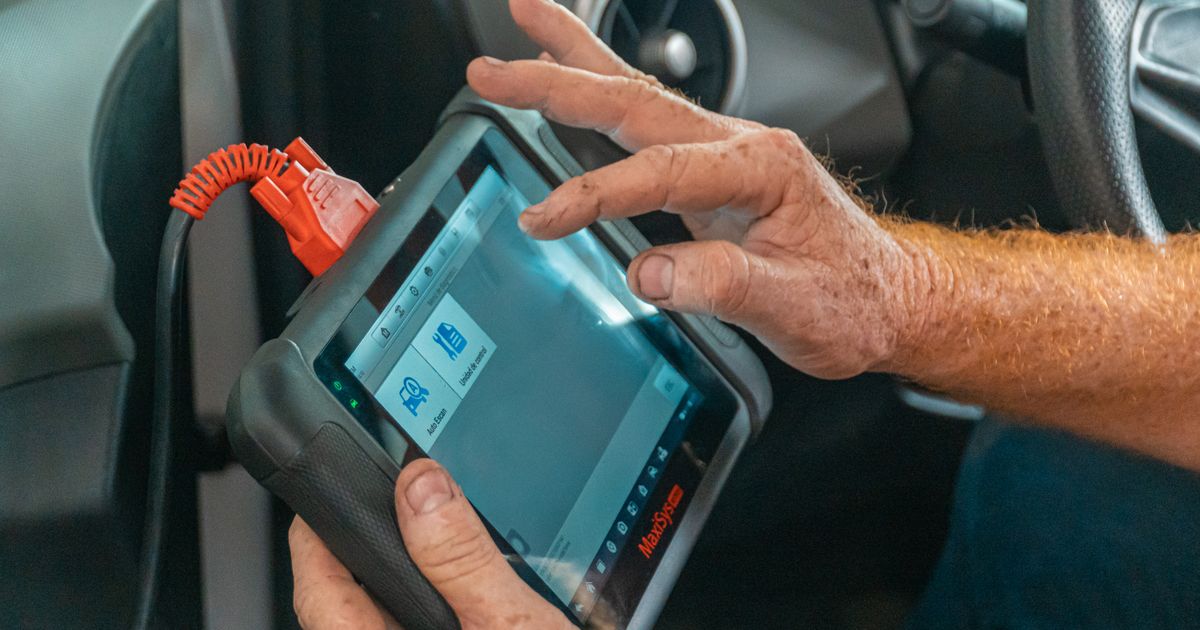
This section explores the diagnostic process for identifying issues with engine misfires, focusing on the P0300 code without presuming ignition component failure. Understanding the P0300 code requires examining broader engine performance data, not just specific ignition system elements. Practical guidance here avoids speculative diagnoses, emphasizing the importance of comprehensive vehicle diagnostics over isolated part replacements. Engine misfire codes like P0300 necessitate a systematic approach, integrating vehicle data with observed symptoms to formulate accurate diagnoses.
To record standard engine and emissions fault codes before making changes, try AutoScan for Windows free trial with a compatible ELM327 adapter.
Meaning on the named make
P0300 in Volkswagen vehicles indicates a random misfire detected by the engine control module, not a specific part failure. This code suggests the engine control unit has detected irregular firing across cylinders, prompting a diagnostic investigation. Addressing P0300 requires identifying the underlying cause through systematic checks, not immediate replacement of parts. Consulting Volkswagen service manuals can provide guidance on the specific diagnostic procedures for P0300.
For further detail, see SAE J1979 standard overview guidance.
Confirm the engine and code status
Confirm the engine and code status by reviewing the vehicle's diagnostic trouble codes under the SAE J1979 standard. Ensure the OBD system has completed all necessary readiness tests before interpreting the P0300 code accurately. Consult the EPA's OBD-I/M guidelines to understand the implications of the code in emission compliance contexts. Verify that the engine's operational parameters match the expected values for a healthy engine before proceeding further.
For further detail, see US EPA OBD information guidance.
Save freeze-frame and related codes
Save the diagnostic data at the moment the fault code P0300 appears to capture the engine's condition accurately. Review related codes alongside P0300 to understand the broader context of the engine's malfunction. Freeze-frame data captures the engine's status at the time of the fault, offering critical insights for troubleshooting. Consulting related codes and freeze-frame data helps in identifying the exact moment and conditions of the engine's issue.
Check model-specific information
Check model-specific Volkswagen documentation for precise diagnostic procedures and engine configurations. Refer to manufacturer guidelines to understand unique engine characteristics and diagnostic protocols. Consult official Volkswagen service manuals for detailed instructions on handling P0300 trouble codes. Specific model details can provide critical insights into engine management systems and diagnostic codes.
Avoid parts-swapping guesses
Avoid replacing parts based on a P0300 code without thorough diagnostics to prevent unnecessary expenses and potential new issues. Inspect the fuel system, air intake, and engine components separately to isolate the cause of misfires indicated by the code. Consult Volkswagen-specific repair manuals for precise procedures and avoid general assumptions about coil or plug failures. Utilise diagnostic tools to monitor engine parameters during operation to observe real-time data correlating with the fault code.
Plan the next diagnostic step
Plan the next diagnostic step by reviewing the vehicle's specific OBD-II system requirements and limitations. Consult model-specific information to understand unique diagnostic procedures for the Volkswagen engine code P0300. Avoid premature part replacements; instead, use diagnostic tools to monitor system readiness after each test. Ensure all related codes are addressed before clearing the codes to prevent overlooking underlying issues.
Use the code as evidence, not a parts list
A diagnostic trouble code identifies the system or test that noticed an unexpected result; it does not prove that the component named in the description has failed. Before clearing anything, save the full code, whether it is stored or pending, the freeze-frame values and any symptoms you observed. Compare those clues with vehicle-specific workshop information. Wiring, air or exhaust leaks, low voltage and related faults can produce similar codes, so replacing the first part mentioned is an expensive way to guess.
Know the limits of a scan
Standard OBD information is useful, but it is only one layer of a diagnosis. Braking, airbag, high-voltage and manufacturer-specific systems may need compatible equipment and trained handling. A scan also cannot confirm that a safety recall has been completed: use the manufacturer or the official GOV.UK recall service. If the car runs roughly, loses power, overheats, shows a red warning, smells of fuel or makes an unusual mechanical noise, stop and seek qualified help rather than continuing a test drive.
Next steps
P0300 indicates a potential misfire across all cylinders, requiring thorough data analysis before any part replacement. Avoid guessing part failures; use diagnostic tools to save freeze-frame data and related codes for accurate fault identification. Consult model-specific information for Volkswagen to understand engine and code status, ensuring a targeted diagnostic approach. Plan subsequent diagnostic steps based on collected data, aiming to isolate the issue without premature component replacement.

Common questions
How do I address a P0300 code in my Volkswagen?
Use diagnostic tools to capture freeze-frame data and related codes, then consult Volkswagen service manuals for precise procedures. Avoid immediate part replacements; identify the underlying cause through systematic checks.
What should I do if my Volkswagen shows a P0300 code?
Save diagnostic data at the moment the fault code appears to capture the engine's condition accurately. Review related codes and consult model-specific information for targeted diagnostics.
Why is it important to save diagnostic data for a P0300 code?
Saving freeze-frame data helps isolate the exact moment and conditions of the engine's issue, providing critical insights for troubleshooting and accurate fault identification.