

An illuminated airbag warning light on your dashboard signals that the supplemental restraint system has detected a fault requiring professional attention. Because the system governs life-critical components, noting the light's colour and any accompanying symptoms is the safest evidence you can safely collect. A fault code retrieved during a diagnostic check indicates a problem area, but it does not confirm which specific part has failed. Specialist handling is essential because airbag components can deploy unexpectedly, making amateur investigation genuinely dangerous and potentially invalidating your insurance cover.
To record standard engine and emissions fault codes before making changes, try AutoScan for Windows free trial with a compatible ELM327 adapter.
What the warning indicates
The airbag warning light indicates the supplemental restraint system has detected a fault that may prevent airbags from deploying correctly. Because the light signals a potential safety-critical failure, it should be treated with the same urgency as a red dashboard warning. A fault code stored in the system's control unit points to a possible issue but does not confirm which component has actually failed. Only a qualified technician with specialist diagnostic equipment should inspect or clear any faults recorded within the airbag system.
For further detail, see RAC dashboard warning-light guide guidance.
Decide whether it is safe to continue
Because airbags are a safety-critical system, an active warning light means you cannot confirm they will deploy correctly in a crash. The RAC classifies this as an amber warning, meaning you should seek a qualified mechanic promptly rather than stopping immediately. Before driving further, use the GOV.UK recall checker with your registration number to establish whether a known airbag defect affects your vehicle. Only a qualified technician using specialist diagnostic equipment can identify the root cause and confirm whether the system is restored to full operation.
For further detail, see GOV.UK MOT inspection manual guidance.
Record symptoms and recent events
Note the exact moment the warning light appeared and whether it coincided with any unusual sounds, jolts, or impacts. Write down any recent events that may be relevant, such as a minor collision, kerb strike, or repair work. Observe whether the warning light is constant or intermittent, and note any other warning symbols that appear on the dashboard at the same time. This written record assists a qualified technician in focusing their inspection, but it does not confirm any particular component has failed.
Use scan data as evidence
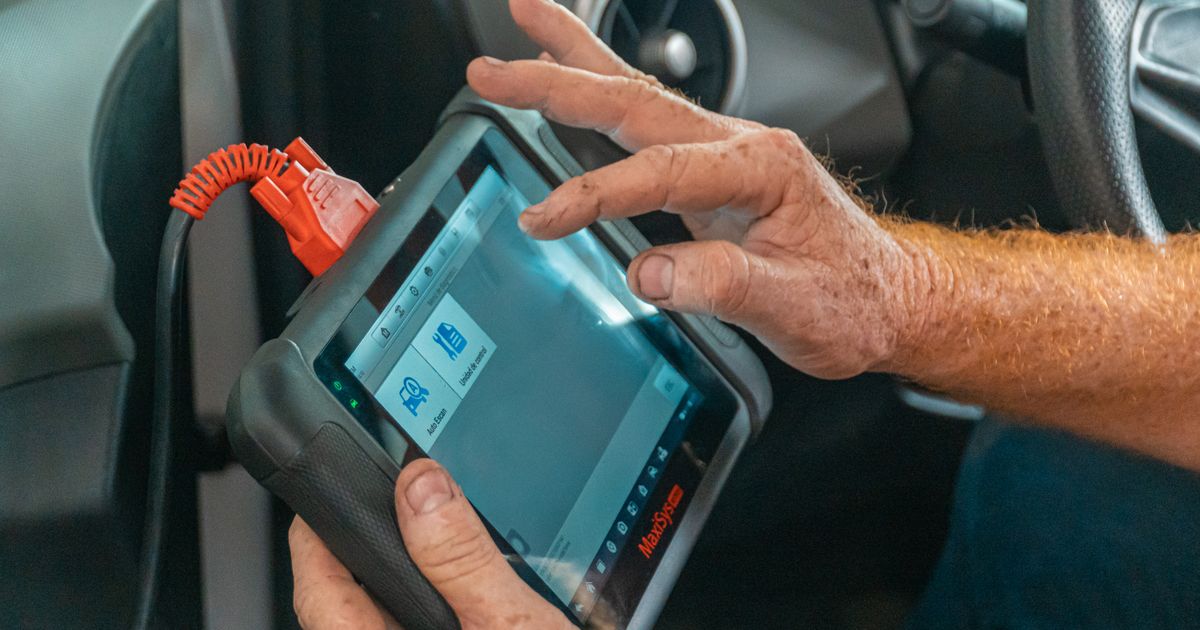
A fault code reader connected to the OBD-II port can retrieve stored airbag system codes without physically disturbing any component. The code number and description are observations only; they identify which circuit flagged an anomaly, not which part has failed. Photograph or note the exact code, any freeze-frame data, and pending codes before a technician clears the system's memory. Hand this record to a qualified specialist, since airbag systems require dedicated equipment and accredited training to diagnose and service safely.
Checks that do not create extra risk
Check the GOV.UK vehicle recall database using your registration number to confirm whether an open manufacturer safety recall exists. Visually inspect the steering wheel centre pad and any dashboard airbag covers for cracks, bulges, or obviously displaced trim panels. Look at seat belt buckles and webbing for damage that a technician would need to know about, without pulling forcefully. Do not probe wiring connectors, yellow supplemental-restraint wiring, or pretensioner components, as disturbance can cause unintended airbag deployment.
When to stop and seek help
When an airbag system warning appears, cease driving immediately to prevent potential deployment risks and ensure safety. Stopping promptly allows you to avoid hazardous situations that could trigger airbag deployment unexpectedly. Seeking professional assistance ensures the airbag system is examined by experts familiar with its complex functions. Professional handling minimises the risk of further damage and ensures compliance with manufacturer guidelines and safety standards.
Use the code as evidence, not a parts list
A diagnostic trouble code identifies the system or test that noticed an unexpected result; it does not prove that the component named in the description has failed. Before clearing anything, save the full code, whether it is stored or pending, the freeze-frame values and any symptoms you observed. Compare those clues with vehicle-specific workshop information. Wiring, air or exhaust leaks, low voltage and related faults can produce similar codes, so replacing the first part mentioned is an expensive way to guess.
Know the limits of a scan
Standard OBD information is useful, but it is only one layer of a diagnosis. Braking, airbag, high-voltage and manufacturer-specific systems may need compatible equipment and trained handling. A scan also cannot confirm that a safety recall has been completed: use the manufacturer or the official GOV.UK recall service. If the car runs roughly, loses power, overheats, shows a red warning, smells of fuel or makes an unusual mechanical noise, stop and seek qualified help rather than continuing a test drive.
Next steps
Airbag-system warnings demand immediate attention due to potential safety risks and complex diagnostics. Collecting safe evidence involves noting warning light appearance and any associated sounds or vibrations without disassembly. Specialist handling is crucial to prevent accidental airbag deployment and ensure accurate fault identification. Professional mechanics use diagnostic tools to interpret codes and assess airbag system integrity safely.

Common questions
What does an airbag warning light indicate?
It signals a fault in the airbag system that may prevent airbags from deploying correctly, requiring immediate professional attention to ensure safety.
Why should I not drive with an airbag warning light on?
Driving with an airbag warning light on is unsafe as it may prevent airbags from deploying in a crash or cause them to deploy unexpectedly, risking further damage or injury.
How can I safely collect evidence for an airbag warning light?
Note the exact moment the light appeared, any associated sounds or impacts, and record any other warning symbols on the dashboard to assist a qualified technician in focusing their inspection.