
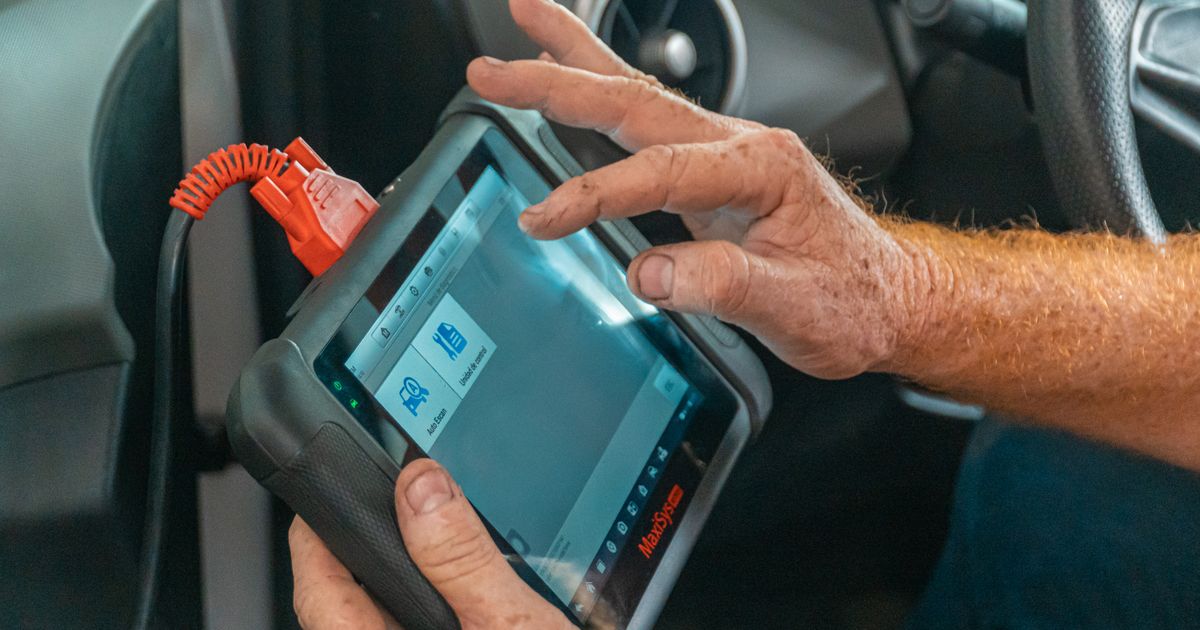

P0087 indicates a low fuel level sensor reading, suggesting potential issues with the sensor or fuel system calibration. This code may not pose immediate safety risks but could indicate fuel delivery problems requiring professional inspection. Addressing P0087 involves checking fuel pressure and sensor operation, tasks needing precise diagnostic tools and expertise. Ensure any fuel system work is conducted safely, using appropriate equipment to prevent leaks and protect against fumes.
To record standard engine and emissions fault codes before making changes, try AutoScan for Windows free trial with a compatible ELM327 adapter.
What the code records
P0087 indicates a fuel system issue, specifically low pressure detected by the vehicle's computer. This code suggests a problem with the fuel pump or fuel pressure sensor, not necessarily a part failure. Addressing P0087 requires careful inspection of fuel lines and connections, not just immediate replacement. Working on fuel pressure systems demands precise tools and knowledge to ensure safety and accuracy.
For further detail, see SAE J1979 standard overview guidance.
Symptoms and context worth noting
P0087 indicates low fuel pressure, suggesting a malfunction in the fuel system that requires professional inspection. Symptoms like reduced fuel efficiency or difficulty starting may indicate underlying issues needing expert evaluation. Fuel system repairs demand precise tools to ensure safety and effectiveness, preventing further complications. Ignoring P0087 can lead to engine damage; regular checks help maintain vehicle performance and longevity.
For further detail, see US EPA OBD information guidance.
Evidence to save before clearing
Before clearing P0087, record fuel pressure readings and inspect fuel system components for leaks or damage. Ensure to document any irregularities in fuel consumption and engine performance before addressing the P0087 code. Capture the vehicle's mileage and note any recent changes in driving conditions or fuel type used. Save diagnostic trouble codes and related sensor data to track the code's recurrence and inform further analysis.
Possible system-level causes
P0087 indicates a fuel system issue, often related to fuel level or pressure sensors, requiring careful inspection. Fuel pressure regulators or fuel pump malfunctions can trigger P0087, necessitating professional assessment of fuel system components. Addressing P0087 involves checking fuel pressure and sensor readings, which demand precise diagnostic tools and expertise. Safety concerns arise if fuel pressure drops, affecting engine performance; thus, regular checks are vital to prevent issues.
A sensible diagnostic sequence
Begin diagnostics by reviewing warning lights and recent driving conditions for P0087, noting any fuel pressure anomalies. Avoid immediate component replacement; instead, verify fuel pressure regulator settings and fuel pump functionality first. Ensure diagnostic equipment is compatible with vehicle make and model to accurately retrieve and interpret P0087 data. Consult manufacturer guidelines for safe and effective procedures when addressing fuel system issues indicated by P0087.
When professional diagnosis is safer
P0087 diagnostic checks require professional tools to ensure accurate readings and prevent misinterpretation of fuel system issues. Addressing fuel pressure faults demands precise equipment to measure pressures accurately, avoiding incorrect diagnoses and potential hazards. Professional mechanics use calibrated instruments for P0087, ensuring safe and effective identification of fuel pump or fuel level sensor problems. Ignoring the need for specialized diagnostic tools when dealing with P0087 can lead to incorrect assessments and unsafe vehicle operation.
Use the code as evidence, not a parts list
A diagnostic trouble code identifies the system or test that noticed an unexpected result; it does not prove that the component named in the description has failed. Before clearing anything, save the full code, whether it is stored or pending, the freeze-frame values and any symptoms you observed. Compare those clues with vehicle-specific workshop information. Wiring, air or exhaust leaks, low voltage and related faults can produce similar codes, so replacing the first part mentioned is an expensive way to guess.
Know the limits of a scan
Standard OBD information is useful, but it is only one layer of a diagnosis. Braking, airbag, high-voltage and manufacturer-specific systems may need compatible equipment and trained handling. A scan also cannot confirm that a safety recall has been completed: use the manufacturer or the official GOV.UK recall service. If the car runs roughly, loses power, overheats, shows a red warning, smells of fuel or makes an unusual mechanical noise, stop and seek qualified help rather than continuing a test drive.
Next steps
P0087 indicates low fuel pressure, suggesting issues with the fuel pump or pressure sensor, requiring careful inspection. Addressing fuel pressure faults demands precision tools and expertise to ensure accurate readings and safe repairs. Ignoring P0087 can lead to engine malfunction, reduced fuel efficiency, and potential safety hazards on the road. Professional mechanics use diagnostic software to isolate the exact cause of P0087, preventing unnecessary part replacements.

Common questions
What does the P0087 code indicate?
The P0087 code signals a low fuel pressure issue, often due to problems with the fuel pump or fuel pressure sensor, necessitating a professional inspection to ensure vehicle safety and performance.
Why is it important to record diagnostic trouble codes before addressing P0087?
Recording diagnostic trouble codes before addressing P0087 helps track the issue's recurrence and informs further analysis, ensuring accurate and safe repairs.
What safety measures should be taken when working on fuel systems?
Working on fuel systems demands precise tools and knowledge to ensure safety and effectiveness, preventing leaks and protecting against fumes during repairs.