
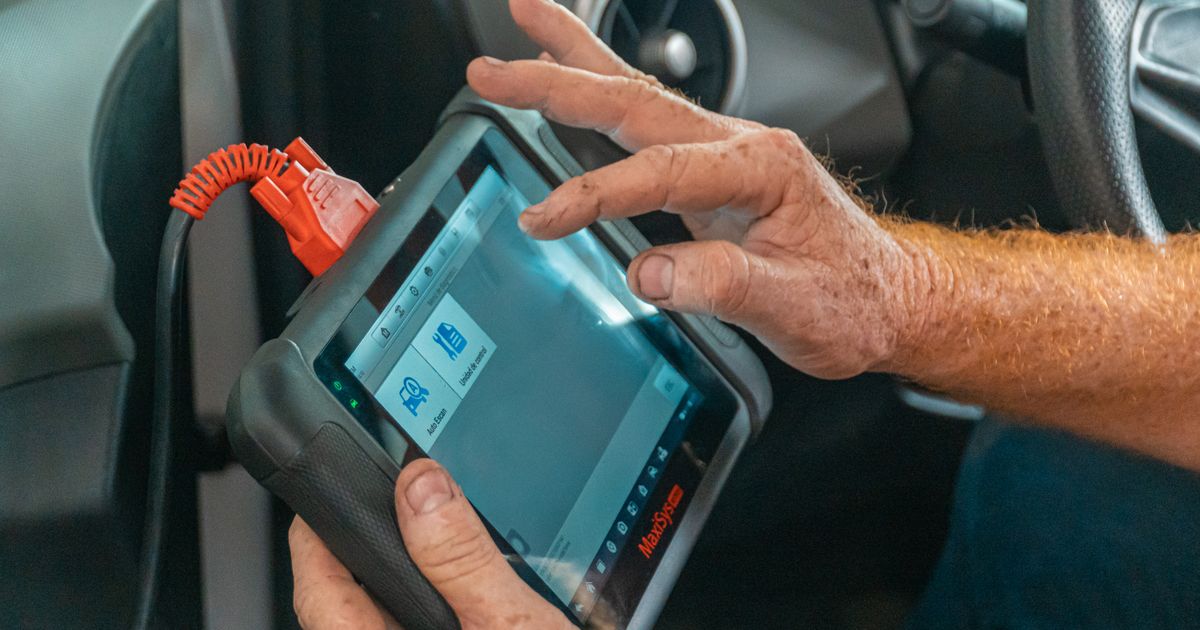

An implausible intake-air temperature reading can trigger P0113, indicating a potential issue with the sensor or wiring. To trace the circuit, check for continuity and voltage at the sensor connector, comparing readings to manufacturer specifications. Inspect the wiring harness for any signs of damage or corrosion that could affect the sensor's accuracy and reliability. Consult the vehicle's service manual for specific diagnostic procedures and test points related to the intake-air temperature sensor.
To record standard engine and emissions fault codes before making changes, try AutoScan for Windows free trial with a compatible ELM327 adapter.
What the code records
Fault code P0113 indicates a discrepancy in the intake-air temperature sensor's readings, suggesting a potential malfunction or wiring issue. Mechanics use diagnostic tools to extract P0113, which helps trace the circuit's condition without assuming part failure. Inspecting the wiring and connectors between the ECU and intake-air temperature sensor is crucial for identifying intermittent faults. Accurate documentation of the sensor's voltage and resistance values against known specifications aids in verifying sensor health.
For further detail, see SAE J1979 standard overview guidance.
Symptoms and context worth noting
Noticing erratic intake-air temperature readings can trigger P0113, indicating a potential issue with the sensor circuit or wiring. Inspecting the vehicle's data logger for fluctuating temperature values helps trace the circuit's anomalies before diagnosing. Drivers should monitor for dashboard warnings alongside unusual fuel efficiency or engine performance to correlate with P0113. Mechanics use diagnostic tools to isolate the problematic segment of the intake-air temperature sensor circuit, ensuring precise repairs.
For further detail, see US EPA OBD information guidance.
Evidence to save before clearing
Before clearing P0113, record the vehicle's mileage, current fault codes, and any recent driving patterns or environmental conditions. Document the intake-air temperature sensor's voltage readings and the engine coolant temperature sensor's readings before resetting the system. Capture the state of the battery and alternator health, as electrical issues can affect sensor accuracy and fault code generation. Note any unusual dashboard lights or warning signals that appear alongside P0113, as these may provide clues about related system failures.
Possible system-level causes
An implausible intake-air temperature reading might indicate a malfunctioning sensor or wiring issue triggering P0113. Inspect the wiring harness for signs of damage or corrosion near the intake-air temperature sensor to trace the circuit. Verify connections between the sensor and ECU, checking for loose or corroded terminals that could distort readings. Consult vehicle-specific diagnostic flowcharts to methodically isolate and observe the problematic section of the circuit.
A sensible diagnostic sequence
Diagnosing P0113 starts by verifying the intake-air temperature sensor's reading against ambient conditions and engine operation. Inspect wiring and connectors for the intake-air temperature sensor, looking for corrosion or damage that could mislead the system. Monitor the sensor's voltage output with a multimeter while varying the air temperature to detect erratic readings or static values. Compare sensor behavior with known good units or consult manufacturer data for expected temperature ranges and response times.
When professional diagnosis is safer
Professional diagnosis ensures accurate identification of issues with complex systems like the intake-air temperature sensor circuit. Expertise is crucial when dealing with intricate vehicle systems to prevent misinterpretation of error codes like P0113. A trained technician can trace the circuit for the intake-air temperature sensor, identifying where the implausible reading originates. Avoid self-diagnosis to prevent overlooking subtle signs that could indicate broader issues with the vehicle's emissions control system.
Use the code as evidence, not a parts list
A diagnostic trouble code identifies the system or test that noticed an unexpected result; it does not prove that the component named in the description has failed. Before clearing anything, save the full code, whether it is stored or pending, the freeze-frame values and any symptoms you observed. Compare those clues with vehicle-specific workshop information. Wiring, air or exhaust leaks, low voltage and related faults can produce similar codes, so replacing the first part mentioned is an expensive way to guess.
Know the limits of a scan
Standard OBD information is useful, but it is only one layer of a diagnosis. Braking, airbag, high-voltage and manufacturer-specific systems may need compatible equipment and trained handling. A scan also cannot confirm that a safety recall has been completed: use the manufacturer or the official GOV.UK recall service. If the car runs roughly, loses power, overheats, shows a red warning, smells of fuel or makes an unusual mechanical noise, stop and seek qualified help rather than continuing a test drive.
Next steps
An implausible intake-air temperature reading triggering P0113 requires tracing the sensor circuit for accurate fault location. Inspecting wiring and connectors for signs of damage or corrosion helps isolate issues in the intake-air temperature sensor circuit. Ensure the sensor and its housing are securely mounted to prevent air leaks that could cause erratic temperature readings. Consulting the vehicle’s service manual provides guidance on testing the sensor’s resistance to confirm its operational status.

Common questions
What does P0113 indicate in a vehicle?
P0113 indicates an issue with the intake-air temperature sensor or its circuit, suggesting a malfunction or wiring problem that requires inspection of the sensor and wiring for damage or corrosion.
Why is it important to record data before clearing P0113?
Recording data such as fault codes, sensor readings, and vehicle conditions before clearing P0113 helps in diagnosing the issue accurately and verifying sensor health.
What steps should be taken to diagnose P0113?
To diagnose P0113, inspect the wiring and connectors for the intake-air temperature sensor, check for corrosion or damage, and verify sensor readings against manufacturer specifications.