
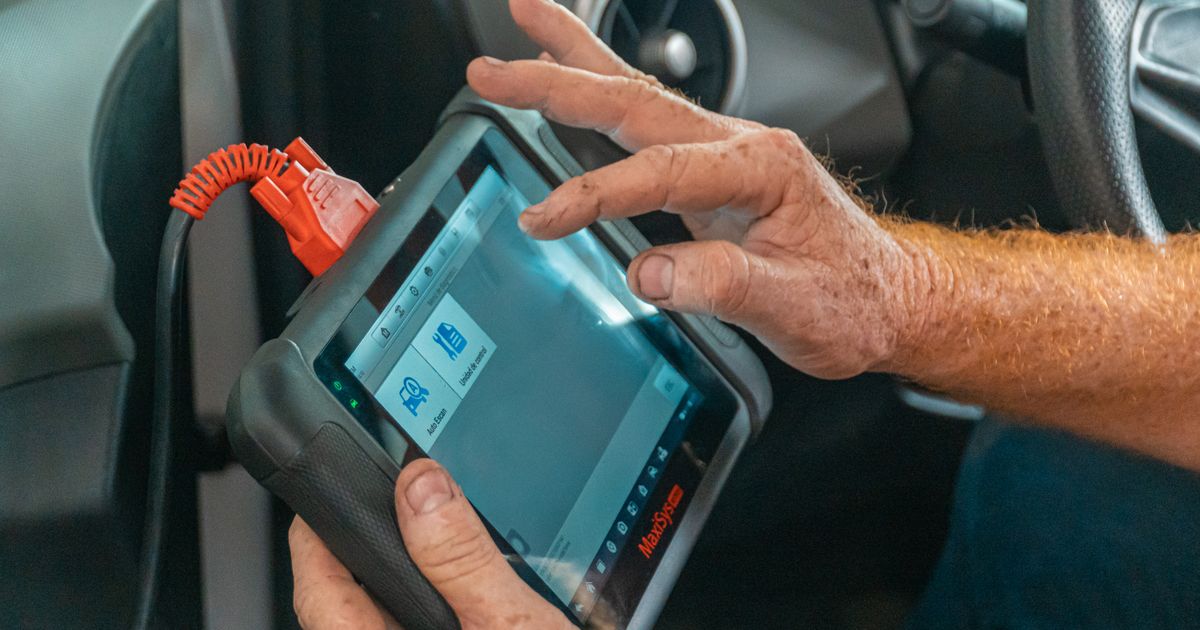

P0420 indicates catalyst efficiency below threshold, suggesting potential issues with exhaust emissions control systems. This code alerts mechanics to investigate further, as it does not definitively indicate catalytic converter failure. Observing P0420 prompts checking exhaust gases, oxygen sensors, and engine misfires before condemning the converter. Addressing underlying causes like clogged catalytic converters or malfunctioning sensors can prevent premature replacement.
To record standard engine and emissions fault codes before making changes, try AutoScan for Windows free trial with a compatible ELM327 adapter.
What the code records
P0420 signals the catalytic converter's efficiency has dropped below regulatory standards, indicating potential emission control issues. This code suggests the converter may not be reducing exhaust pollutants effectively, but further diagnostics are essential for accurate assessment. Engineers set thresholds for P0420 based on emission standards, ensuring vehicles meet legal requirements for air quality protection. While P0420 alerts drivers to potential emission problems, it does not definitively prove the catalytic converter itself is malfunctioning.
For further detail, see SAE J1979 standard overview guidance.
Symptoms and context worth noting
Symptoms like reduced fuel efficiency or engine misfires may accompany a P0420 code, signaling potential issues with the exhaust system. Owners should note any changes in vehicle performance or emissions before concluding a catalytic converter failure based on a P0420 code alone. Monitoring for black smoke, unusual noises from the exhaust, or a decrease in vehicle power can provide additional context for a P0420 fault. It's crucial to observe these signs alongside the diagnostic code, as they offer a more comprehensive view of the vehicle's condition.
For further detail, see US EPA OBD information guidance.
Evidence to save before clearing
Before clearing P0420, record engine temperature, mileage, and any recent fuel or maintenance changes to aid in accurate diagnosis. Save the OBD-II scan data and note any additional codes, as they can provide context for the catalytic converter's condition. Document the vehicle's emissions output and performance characteristics, as these can indicate issues beyond the converter itself. Avoid immediate repair decisions based solely on P0420; gather evidence to distinguish between actual failure and less severe issues.
Possible system-level causes
System-level issues like vacuum leaks or air intake restrictions can trigger P0420 without converter fault. Ensure fuel and air mixture is correctly balanced, as rich or lean conditions stress the catalytic converter. Inspect and repair any exhaust leaks before addressing P0420, as they can mislead diagnostic readings. Addressing engine misfires promptly can prevent them from overheating the catalytic converter and triggering P0420.
A sensible diagnostic sequence
A diagnostic sequence starts with observing vehicle behaviour and symptoms before consulting the fault codes. Reviewing the car's history and recent mileage aids in understanding when the issue might have started. Avoid jumping to conclusions; multiple codes can indicate various issues, not just a single part failure. After identifying patterns, consult service manuals for system-level checks to refine the diagnostic approach.
When professional diagnosis is safer
P0420 signals potential catalytic converter issues, prompting a professional to assess without immediate action. Expert technicians use diagnostic tools to thoroughly examine vehicle systems, ensuring accurate identification of problems. Ignoring P0420 could lead to environmental and legal penalties, underscoring the need for professional evaluation. Professional mechanics can distinguish between minor and severe catalytic converter issues, guiding appropriate maintenance actions.
Use the code as evidence, not a parts list
A diagnostic trouble code identifies the system or test that noticed an unexpected result; it does not prove that the component named in the description has failed. Before clearing anything, save the full code, whether it is stored or pending, the freeze-frame values and any symptoms you observed. Compare those clues with vehicle-specific workshop information. Wiring, air or exhaust leaks, low voltage and related faults can produce similar codes, so replacing the first part mentioned is an expensive way to guess.
Know the limits of a scan
Standard OBD information is useful, but it is only one layer of a diagnosis. Braking, airbag, high-voltage and manufacturer-specific systems may need compatible equipment and trained handling. A scan also cannot confirm that a safety recall has been completed: use the manufacturer or the official GOV.UK recall service. If the car runs roughly, loses power, overheats, shows a red warning, smells of fuel or makes an unusual mechanical noise, stop and seek qualified help rather than continuing a test drive.
Next steps
P0420 signals potential catalytic converter inefficiency, prompting investigation into exhaust emissions and engine operation. Clearing P0420 without addressing underlying issues may mask problems, delaying necessary repairs and worsening emissions. Professional diagnosis ensures accurate identification of causes affecting catalytic converter efficiency, avoiding premature replacement. Regular maintenance and monitoring help prevent catalytic converter issues, maintaining vehicle performance and emission standards.

Common questions
What does a P0420 code indicate?
A P0420 code signals the catalytic converter's efficiency has dropped below regulatory standards, suggesting potential exhaust emission control issues, but does not definitively prove converter failure.
Why should I not immediately replace the catalytic converter upon seeing a P0420 code?
Clearing P0420 without addressing underlying issues may mask problems, delaying necessary repairs and worsening emissions; professional diagnosis ensures accurate identification of causes affecting converter efficiency.
What evidence should I gather before addressing a P0420 code?
Before clearing P0420, record engine temperature, mileage, and any recent fuel or maintenance changes to aid in accurate diagnosis; save OBD-II scan data and note additional codes for context.