
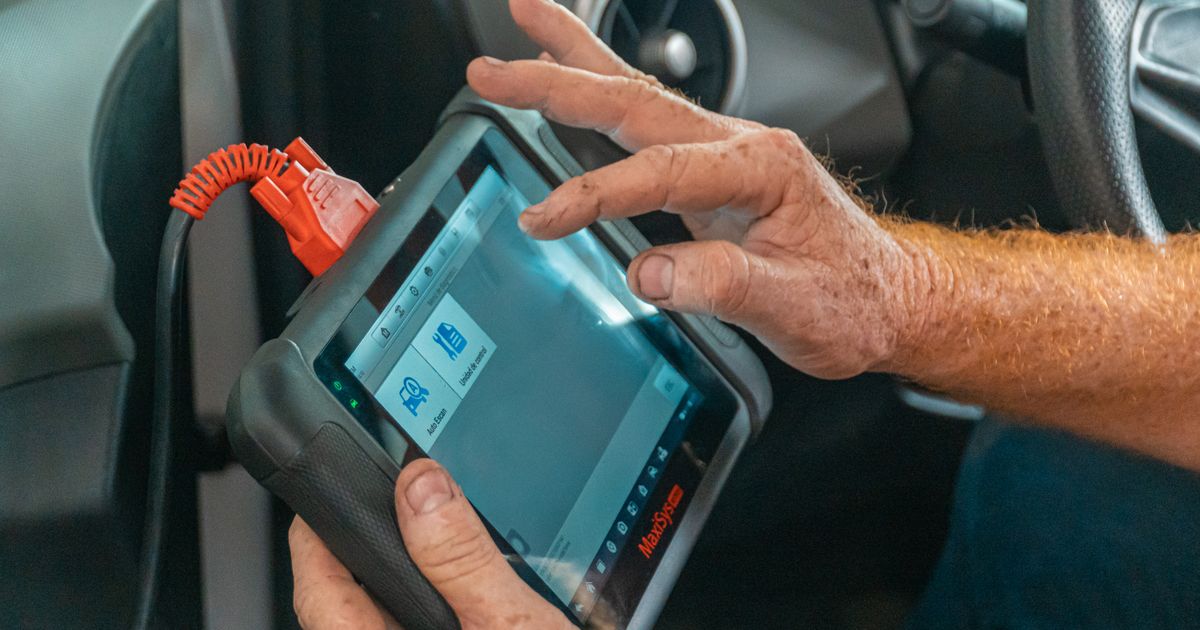

Understanding P0500 involves recognising its impact on vehicle modules and signals, not just immediate symptoms. Speedometer inaccuracies, ABS malfunctions, and wiring issues often intertwine with P0500, complicating diagnosis. Practitioners must examine vehicle signals and system interactions to deduce the root cause of P0500, avoiding hasty repairs. Careful observation of vehicle behaviour, alongside diagnostic codes, guides technicians towards informed, safe maintenance actions.
To record standard engine and emissions fault codes before making changes, try AutoScan for Windows free trial with a compatible ELM327 adapter.
What the code records
P0500 code records transmission control module issues, indicating potential problems with vehicle speed sensor signals. This fault code signifies a malfunction in the vehicle's control system, affecting speedometer accuracy and ABS functionality. Wiring issues or sensor malfunctions can trigger P0500, highlighting the importance of thorough diagnostic checks. Addressing P0500 requires careful examination of electrical connections and sensor outputs to ensure reliable vehicle operation.
For further detail, see SAE J1979 standard overview guidance.
Symptoms and context worth noting
P0500 may signal issues with the vehicle's transmission control module or wiring, affecting multiple systems. Owners should note erratic speedometer readings, as they indicate possible P0500-related transmission control module malfunctions. ABS light activation alongside P0500 suggests potential wiring issues or module communication problems, warranting further inspection. Inspecting for loose or damaged wiring near the transmission control module is crucial, as it can influence diagnostic signals.
For further detail, see US EPA OBD information guidance.
Evidence to save before clearing
Before clearing P0500, record speedometer readings and ABS operation to identify potential issues. Document wiring conditions and sensor signals to ensure accurate fault location without premature code clearance. Observing vehicle behavior under varied conditions provides clues about P0500's underlying causes. Maintaining diagnostic data helps technicians understand vehicle history and make informed decisions.
Possible system-level causes
P0500 faults may stem from transmission control module malfunctions affecting vehicle speed sensor signals. Issues with the vehicle speed sensor can disrupt ABS functionality, impacting braking performance and safety. Inspecting wiring harnesses for damage or corrosion is crucial, as faulty connections can trigger P0500 errors. Accurate diagnosis requires understanding how the PCM integrates signals from multiple systems, influencing overall vehicle dynamics.
A sensible diagnostic sequence
Diagnosing P0500 requires checking the transmission control module and related sensors for accurate speedometer readings. Inspect wiring harness connections and vehicle speed sensor for integrity, as faulty signals can trigger P0500. ABS systems rely on precise speedometer signals; thus, P0500 can disrupt ABS functionality and safety. Maintain a record of diagnostic trouble codes before clearing to ensure comprehensive analysis and informed repair decisions.
When professional diagnosis is safer
Professional diagnosis ensures accurate identification of underlying issues affecting the speedometer and ABS systems. Expertise is crucial for interpreting complex interactions between vehicle modules and their diagnostic signals. Wiring issues can subtly affect multiple systems, making professional assessment essential for thorough evaluation. Avoid self-diagnosis to prevent overlooking critical signs of broader vehicle health issues that require expert attention.
Use the code as evidence, not a parts list
A diagnostic trouble code identifies the system or test that noticed an unexpected result; it does not prove that the component named in the description has failed. Before clearing anything, save the full code, whether it is stored or pending, the freeze-frame values and any symptoms you observed. Compare those clues with vehicle-specific workshop information. Wiring, air or exhaust leaks, low voltage and related faults can produce similar codes, so replacing the first part mentioned is an expensive way to guess.
Know the limits of a scan
Standard OBD information is useful, but it is only one layer of a diagnosis. Braking, airbag, high-voltage and manufacturer-specific systems may need compatible equipment and trained handling. A scan also cannot confirm that a safety recall has been completed: use the manufacturer or the official GOV.UK recall service. If the car runs roughly, loses power, overheats, shows a red warning, smells of fuel or makes an unusual mechanical noise, stop and seek qualified help rather than continuing a test drive.
Next steps
P0500 signals potential issues with vehicle speed sensors or wiring, affecting ABS and speedometer accuracy. Understanding P0500 requires checking sensor connections and signals, as faulty wiring can mislead diagnostic readings. Addressing P0500 involves verifying sensor operation and electrical integrity, crucial for maintaining vehicle safety features. Professional assessment ensures accurate identification and resolution of underlying issues indicated by P0500.

Common questions
What does the P0500 code indicate in a vehicle?
P0500 indicates issues with the transmission control module, affecting vehicle speed sensor signals and impacting speedometer accuracy and ABS functionality.
Why is professional diagnosis recommended for P0500 issues?
Professional diagnosis ensures accurate identification of complex interactions between vehicle modules, preventing overlooking critical signs of broader vehicle health issues that require expert attention.
What should be recorded before clearing the P0500 code?
Before clearing P0500, record speedometer readings, ABS operation, wiring conditions, and sensor signals to ensure accurate fault location and informed repair decisions.