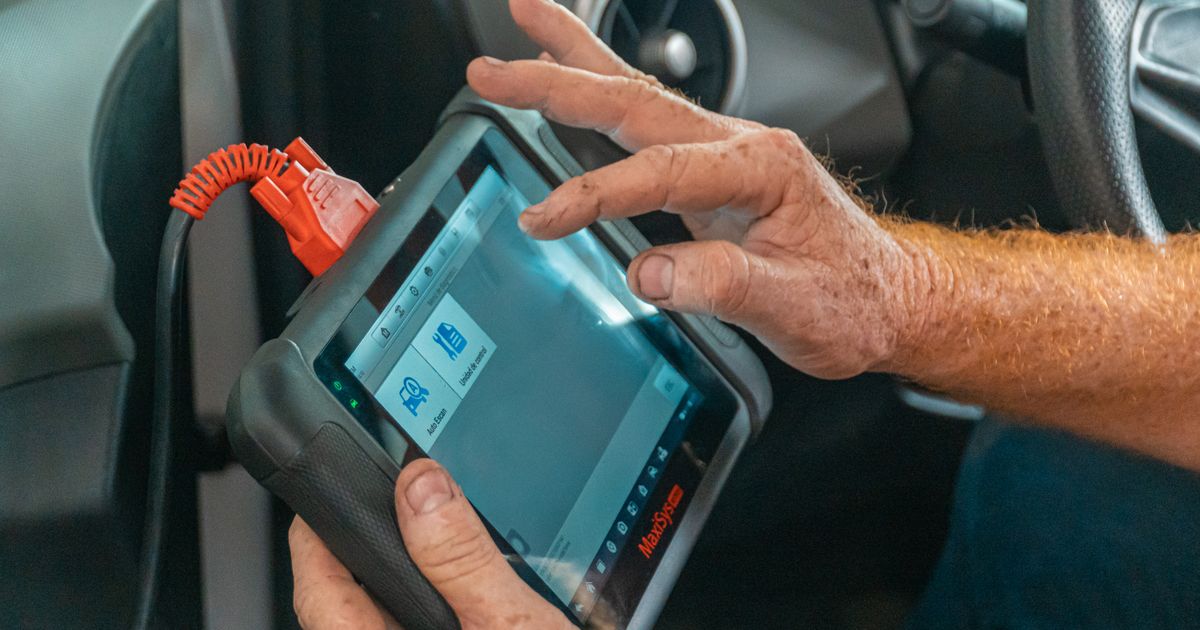
Modern vehicles store fault codes within an on-board diagnostic system that records observed deviations from expected operating parameters. These codes are classified as pending, stored or permanent, and each status represents a different level of confirmed fault evidence. The presence or absence of a warning lamp alongside a code provides critical context that influences how urgently the matter warrants attention. Understanding these distinctions enables drivers and technicians to make better-informed decisions about urgency, further diagnosis, and MOT readiness.
To record standard engine and emissions fault codes before making changes, try AutoScan for Windows free trial with a compatible ELM327 adapter.
What the MOT check covers
The annual MOT test assesses whether a vehicle meets road safety and environmental standards across categories including brakes, steering, and emissions. Inspectors work through sections covering lamps, tyres, bodywork, seat belts, exhaust emissions, and the engine malfunction indicator lamp, known as the MIL. The MIL check falls under Section 8 of the GOV.UK inspection manual, which addresses nuisance items such as noise and fluid leaks. An illuminated MIL observed during inspection is recorded as a defect, but that observation alone does not confirm which underlying component has failed.
For further detail, see GOV.UK MOT inspection manual guidance.
Readiness and warning-lamp evidence
A pending code indicates the control module detected an irregularity on one drive cycle but has not yet confirmed a fault. Once confirmed across multiple drive cycles, the fault becomes a stored code and the malfunction indicator lamp typically illuminates. Permanent codes cannot be cleared by a scan tool and persist until the vehicle's own monitors verify the fault is absent. An illuminated malfunction indicator lamp is an observation; the accompanying code identifies a system of concern, not a confirmed failed component.
For further detail, see GOV.UK getting an MOT guidance.
What clearing codes changes
Clearing stored fault codes with a scan tool extinguishes the malfunction indicator lamp but does not repair the underlying condition that triggered it. All readiness monitors are simultaneously reset to an incomplete status, meaning the vehicle must complete specific drive cycles before they report ready. Permanent diagnostic trouble codes are a distinct category that a scan tool cannot erase; they clear only once the fault is confirmed resolved. If the lamp reilluminates shortly after clearing, that observation indicates the control system has re-detected the same condition and confirmed it again.
Checks before test day
In the days before your test, drive the vehicle on a varied route so self-monitors can complete their readiness cycles. Check whether any warning lamps illuminate at start-up and remain on, as a lit malfunction indicator lamp is a chargeable MOT defect. If a scan tool shows pending codes, those faults have been observed once but not yet confirmed as stored by the vehicle. Permanent codes cannot be cleared by disconnecting the battery, so a technician should assess whether the underlying condition needs attention before the test.
Problems that need repair first
An illuminated malfunction indicator lamp is treated as a direct MOT failure under section 8 of the inspection manual. Where a warning lamp accompanies a stored code, the ECU has confirmed the fault across more than one drive cycle. Permanent codes resist erasure even after a battery disconnect, meaning the vehicle's control system still regards the fault as current. These conditions indicate that an underlying problem exists, and a qualified technician should identify it before the MOT appointment.
Build a useful pre-MOT record
Note the date, mileage, and scanner reading each time you check fault codes, so patterns become visible across multiple sessions. Record whether the malfunction indicator lamp was illuminated or absent when each code was read, as that context matters to any assessor. A simple notebook entry for each scan session, including readiness monitor status, gives any garage a useful snapshot of the vehicle's recent history. Keep records of any warning lamps observed and the dates they appeared, but leave formal diagnosis of their cause to a qualified mechanic.
Use vehicle-specific specifications
Generic maintenance advice cannot replace the handbook or proper workshop information for your exact model. Fluid grades, capacities, lifting points, tightening values and service intervals vary. Record what you find before changing anything, use the specified parts and fluids, and do not work beneath a vehicle supported only by a jack. If a check involves a hot, pressurised, high-voltage or safety-critical system, leave it to a suitably equipped technician.
Turn observations into useful evidence
Note when a symptom appears, the warning lamps involved and any recent work or weather conditions. Photographs and a short timeline can help a garage reproduce an intermittent fault. If an engine warning light appears, save the fault codes and freeze-frame information before clearing them. A reset may remove useful evidence and does not repair the cause.
Next steps
Understanding the difference between pending, stored and permanent codes helps you approach any warning lamp with appropriate caution rather than immediate alarm. A code stored in the ECU is evidence of a detected condition; it does not confirm which specific component has failed. Reading codes alongside warning-lamp status and monitor readiness gives a fuller picture before a qualified technician investigates the fault further. Keeping a dated record of everything you observe puts you and any technician in a stronger position on test day.