A tyre-pressure warning light on your dashboard may signal genuine pressure loss or a fault within the monitoring system itself. Before driving further, a visual inspection of all four tyres from outside the vehicle can reveal an obviously flat or bulging tyre. If all tyres appear visually normal, the warning may indicate a sensor malfunction rather than any actual pressure deficiency. Either way, confirming pressures with a calibrated gauge at a petrol station is the safest next step before resuming your journey.
To record standard engine and emissions fault codes before making changes, try AutoScan for Windows free trial with a compatible ELM327 adapter.
What the warning indicates
The tyre-pressure warning light, usually an amber symbol showing a tyre cross-section, indicates the monitoring system has detected a pressure concern. The light alone does not confirm whether a tyre is genuinely underinflated or whether the monitoring system itself has developed a fault. An amber warning, as described in guidance on dashboard lights, signals something that needs attention but is not automatically classed as an immediate emergency. Until you have checked each tyre physically, treat the warning as a prompt to investigate rather than proof of a specific fault.
For further detail, see RAC dashboard warning-light guide guidance.
Decide whether it is safe to continue
Stop somewhere safe as soon as possible and visually check each tyre for obvious deflation before deciding whether driving can continue. A tyre that appears visually flat or sits noticeably lower than the rest should be treated as a genuine pressure loss. If all four tyres appear correctly inflated and the car handles normally, the light may point to a sensor or system fault. Even when no deflation is visible, a qualified mechanic should confirm the cause promptly, since a slow puncture can worsen without obvious warning.
For further detail, see GOV.UK MOT inspection manual guidance.
Record symptoms and recent events
Note the exact warning light colour and whether it appeared immediately on start-up or only after several miles of driving. Recall any recent events such as kerbing a wheel, driving over a pothole, or visiting a tyre-fitting centre for inflation. Record whether any tyre appears visually deflated or the vehicle pulls to one side, as these observations may point to low pressure. Note when the tyres were last inflated, since cold weather can cause pressure to drop without any underlying mechanical fault present.
Use scan data as evidence
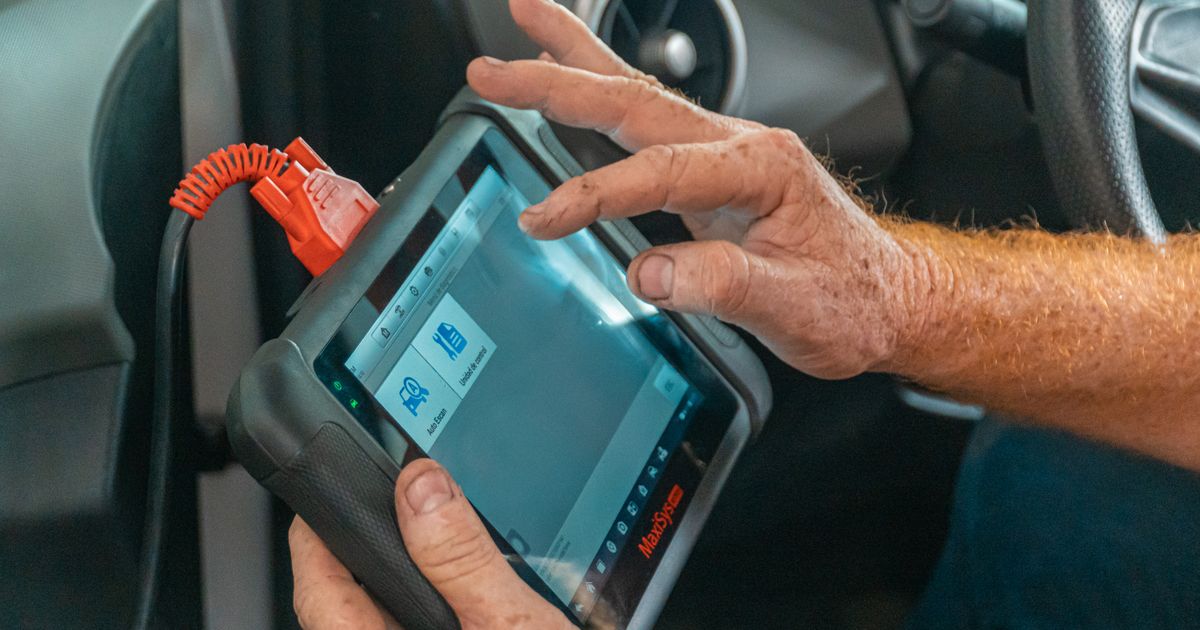
Connecting a code reader to the OBD-II port retrieves stored TPMS fault codes that indicate whether a sensor itself has malfunctioned. A code such as a sensor communication error suggests a monitoring-system fault rather than evidence that any tyre is actually underinflated. If the scan tool shows no electronic fault codes, treat the warning as a genuine pressure reading and check all four tyres physically. Record any fault codes exactly as displayed and share them with a qualified technician so they can confirm the cause before you drive further.
Park on level ground and walk around the vehicle to look at each tyre from a safe distance before touching anything. A tyre that appears visibly flat, bulging, or leaning inward is an observation that warrants calling for assistance rather than driving on. If the tyres look normally inflated and undamaged, use a handheld pressure gauge to take a reading from each valve stem. A reading that matches the manufacturer's recommended pressure suggests the warning light may indicate a monitoring-system fault rather than a genuine pressure loss.
When to stop and seek help
Stop as soon as it is safely possible if a red tyre-related warning light remains lit and no straightforward explanation is apparent. A TPMS fault light that stays illuminated alongside other amber warnings should be assessed by a qualified mechanic without further delay. Before booking a garage visit, use the GOV.UK recall checker to confirm whether a known safety defect applies to your vehicle. If a recall is confirmed, the manufacturer bears responsibility for the repair and you should not drive the vehicle until it is resolved.
Use vehicle-specific specifications
Generic maintenance advice cannot replace the handbook or proper workshop information for your exact model. Fluid grades, capacities, lifting points, tightening values and service intervals vary. Record what you find before changing anything, use the specified parts and fluids, and do not work beneath a vehicle supported only by a jack. If a check involves a hot, pressurised, high-voltage or safety-critical system, leave it to a suitably equipped technician.
Turn observations into useful evidence
Note when a symptom appears, the warning lamps involved and any recent work or weather conditions. Photographs and a short timeline can help a garage reproduce an intermittent fault. If an engine warning light appears, save the fault codes and freeze-frame information before clearing them. A reset may remove useful evidence and does not repair the cause.
Next steps
A persistent warning light after correct inflation suggests a monitoring-system fault rather than a pressure problem, so professional diagnosis remains essential. Careful observation of symptoms and scan data gives a technician the clearest possible starting point for an accurate fault assessment. Acting on what you can safely observe, without attempting repairs yourself, keeps both you and other road users protected. When in doubt, stopping and seeking qualified help is always preferable to continuing a journey on uncertain tyre or sensor condition.